How Estate Planning Protects Your Intellectual Property: AI, Copyright Theft, and Estate Disasters


MONA:
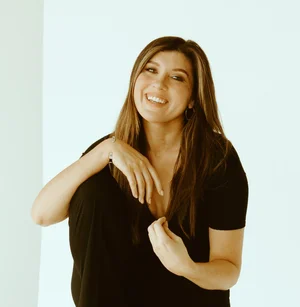
My guest today is my dear friend, Hena Khan. Hena is an award-winning author of over 35 children's books written over the last two decades. Many of them draw on her own experiences as a Pakistani American, as a Muslim, and as a young woman growing up in a multicultural America. Welcome Hena to Not Your Lawyer podcast, where our conversations may be about some legal topics generally, but nothing either of us say is legal advice because although I am a lawyer, I am not your lawyer.
HENA:
Thank you. Thanks, Mona. So fun to be here.
MONA:
So fun to have you. So yesterday I had the privilege of joining you as your plus one as you were honored by Bethesda magazine for being one of 2025 women who inspire. And as I watched on that stage, I couldn't help but think of all the iterations of Panna that I've known through college as a new bride, as a mom and a caregiver to your elderly parents. And I was thinking that all of the young women who are surely looking up to you and will be inspired by your story. I think it would be important for them to see that this career, you know, now 20 years in, which is truly your calling, you were built for this, but it's not where you started necessarily. So can you share a little bit about what you majored in in college and in grad school and where you thought your career was going to be in your 20s?
HENA:
Yeah, thank you. So I think like many of us, looking back now, it makes sense, but it didn't make sense when I was younger and I had no idea what I wanted to do. one thing I was always interested in was writing. I didn't know how or when or if it was even possible to make it into a career. I toyed with journalism because I did have an interest in writing newspaper articles in my family newspaper and then my school newspapers. But I didn't want to study journalism. And someone had told me that if you do, you'll learn a very prescriptive form of writing. So major in English or something else. So I ended up majoring in government and politics and was, in addition to journalism, actually considering law. That was something my mom was pushing me to do. And then once I started studying government politics and took a lot of international relations courses, I got more and more interested in development. And I went on to do my master's in international affairs with a focus on development and health, maternal child health, and other aspects of development. And I wanted to work in programs, actually. But everywhere I worked, I would just naturally gravitate towards the communication stuff. So I'd be the person doing the annual report or the newsletter or something. And even then, it didn't occur to me to focus on communications within my field until there was this position I applied for that was a communications and dissemination specialist.
And that was really taking technical data from studies that were done on public health in general and other countries and translating that to make that more accessible to policymakers and program people on the ground. so I sort of fell into that not realizing that international health communications was actually a field. And so I started doing that for a while. And I really loved it. I loved feeling like I was making a difference in the world and writing about, you know, things I was passionate about, but I was never expecting the segue to children's writing, but it was all because of a friend of mine from second grade, Andrea Manati, who reached out to me when I was on maternity leave with my older son from the job that actually did involve international travel. And she asked me for help on a series she was working on. It was an IP project, so was a writer for hire assignment through scholastic book clubs. And it was part of a series called Spy University. And she said, would you be able to help me? Would you actually be able to rewrite one of these books? Your name won't be on it. So we'll pay you to just basically rewrite it and refresh the language. But we could pay you a small sum and maybe it'll lead to something. And that was what started me even thinking about creative writing as something I could do. And many writers, thought, this.
You know, that sounds fun. I can do this. And then once I started, I thought, my goodness, like my writing is even more stilted and boring than they're asking me to fix. So I had to practice and then everything grew from there. They ended up hiring me to write additional books in that series and other series. And it all started from that moment.
MONA:
Where in the timeline was the Curious George book?
HENA:
So that was after I had done several work prior projects through Scholastic Book Clubs and then had pitched my own book. So my first trade published book that I conceived of completely. And that was Night of the Moon, which came out in 2008. And my second picture book came out in 2012. And all this time, I was still doing consulting work in public health or working part-time in public health while I was working on those books. I didn't really think of it as a career then. It was sort of this side thing.
Um, and then I was asked in 2016 to write the Kary's George Ramadan book. It's called it's Ramadan Kary's George. And it was part of a series of board books where George celebrates different holidays. And they already had Christmas and Hanukkah's grade day, Halloween's, know, everything you can imagine. But the editors reached out and said, would you, would you like to write about Ramadan? Um, which led to the natural question of, well, is the man with the yellow hat Muslim is George Waston. Like how does this work? But yeah, so that's where that came from.
MONA:
And in the end, they just celebrated with Muslim friends. And it's funny because right in my head that comes first because we grew up with Curious George, right? Like now you're big time, you're writing by Curious George. It was funny how much of difference that made in public spheres, at least in terms of public opinion and just name out there. Yeah, we all know Curious George.
And I think you brought up something interesting that worked for hire. That's really different, right? You can write and you have no rights to that. You sign away those rights when people hire you and you do it and you. Which is what the Kier George book was too. IP work. And so I was paid a very modest sum to write that book, which has probably been, I don't have access to all the sales numbers from what I gather now. Years later, I did ask early on. It's a very big seller every year. recently Target started carrying it and I thought, well, that's nice for that. Yeah. No, I mean, from a financial standpoint, but, know, I'm still very proud of it, but yeah, definitely. And I think that we don't sometimes think about, you know, those ancillary benefits of having something like that, right? If, you know, you and I went through a lot of that, now I'm on maternity leave. What do I do and how do we keep our careers moving forward while we are still trying to be the best at all of these other things. But in many ways, having those works for hire, it was a way to kind of build this. then the credibility you get from having something like Curious George, there's a real intangible benefit there too for everything else that you do. Always nice to get a little bit of the revenue, obviously, but there is that intangible as well.
Yeah. So I've heard you talk about your own favorite book, right? The Ramona Quimby series. I'm going to ask you something a little different. What were the books that you read to the boys? Like, what did they like?
HENA:
So I started with, you know, the classic picture books, The Good Night Moons and The Going to Bed Book and all of those. And then when we started reading longer books, well, actually, they drove a lot of it. So I know my younger son, Hamza, was very interested in science books and you know, the deadliest animals alive and he would, you know, check out those types of books and then as they got a little bit older and I started to give them books, you know, that I appreciated, some of them hit, some of them didn't. Yeah, they like, I remember reading them also in the motorcycle by Beverly Cleary and I think, I don't know a kid who doesn't love that book, but yeah, it was interesting to see their own reading tastes develop and have accept that. you like I remember you gave Bilal, my older son, the secrets of Droom. Yeah. And that was his, you know, first set of chapter books. And he devoured those he read all of them. And then I think the series continued and we got more of them. And then when Hamza was around the same age, I just handed him the same books, I thought, okay, you know, now it's time for these books. And he he read them, but he didn't read read them with the same passion. And it took me a while to realize that he liked a different type of book. And He liked some, actually the diverse books I gave him by other authors a little bit more and some of the realistic fiction. So yeah, I love seeing which way kids grow in their reading tastes.
MONA:
Absolutely. And it's not always ours. actually, so this discussion that you and I, you know, we like, this should be on the podcast is when I was telling you, you and I are both avid readers. We share that in common.
I have the collection of all my favorite children's books, some that are my own, some that belong, you know, that I bought brand new. Girls just didn't get Nancy Drew. They just didn't get it. And then when I was reading it, I was like, yes, I guess it's a little bit dated for them. So I got them the, I think it was called like, I don't want to say it wrong. Maybe Nancy Drew Chronicles or something. So it was a more modern version. A little bit better. Did you know it's a multiple authors? Did you know Carolyn Kean is not one person?
HENA:
I did hear that. I did hear that. Right. It's a pseudonym for multiple people. So I guess it might've been IP work that multiple authors And I remember as a kid finding discrepancies in the books and thinking, why is now her hair strawberry blonde and here it's blonde and makes total sense that they didn't really have a greater Especially for a detective book. Right? Don't you think we know that we're paying attention to every clue?
MONA:
Right, right. Exactly. Like maybe she did it.
But you know, so some of my favorite books, like I was telling you, you know, just before this call that my daughter shared with me that my one of my very favorites was Raggedy Ann and the horror movie Annabelle is based on allegedly a true story of the possession of a Raggedy Ann doll and because of copyright issues and also because they're genuinely not scary. They replaced that doll with a porcelain doll.
But you know, where it had started is I was introducing these books and there was my absolute favorite and I have it here for you to see. It's called The 13th is Magic by Joan Howard. And this blurry screen, you can't really see it. I loved this book growing up. It was like just, I don't know if you've ever read it. It takes place in New York City, which is in itself magic. And they live on the 13th floor of this building and all these crazy things happen to them. And it was like my my mission to find it. And I'm looking everywhere. I checked it out of, you know, the Potomac library and, um, you reluctantly gave it back because I couldn't buy it anywhere. And, for years, like my, my little nephew, you know, they knew like this kind of like, guys have to have it. He would say, you know, let's check it out and we'll copy every page for you. I was like, no, can't do that. And finally I found it on Goodreads and it's an old library copy that I paid way too much for, but it brings me so much joy to have it.
Yeah. And then of course you start looking into like the legalities, like why aren't they reprinting it? What's happening here? And, and as you and I were talking about this, you had one of those, wait a minute moments that people have, right? When we talk about tangential legal things that could impact you. And it was that her estate has the rights to the book and it's a couple of issues. think there's that. And also there's not a real interest in reprinting right now.
because there are certain chapters that are outdated and have descriptions of Native Americans and others in a very stereotypical way that could be hurtful. because the copyright is still good for this particular book, she can't rewrite it, right? Like, so if there was something that's dated and you have an author or somebody has those rights, you can rewrite those chapters and make it more palatable and more modern.
But for this particular book, for books created between 1929 and 1977, it's 90 years from the date of publication that that copyright is valid. And then it goes into the public domain. And so, for example, you could then take it over and rewrite those chapters that haven't republished. And so that got you and I both thinking about how this works for authors. so you could actually, because I know I've written a book inspired by Little Women, which was one of my favorites. And I took from it loosely because I didn't want to do a retelling. So it's very much an inspired by. But I know I've seen other versions of books that take the characters and imagine them in different ways. But are you saying that somebody could actually take the entire book and rewrite it in like word for word, but just freshen the language and make it acceptable by today's standards?
Yeah, well, they can borrow from it, certainly. it's because it'll be in the public domain. Nobody owns the copywriting anymore. For example, this year's book that is now in the public domain is a farewell to arms. It no longer has that protection. And for your books, because it's after 1977, it's your life plus 70 years for any work that you've created. Okay. And then people can quote from it freely without having to worry about whether. And perhaps the thinking, right, that that person and their family, it's so far removed, there's no real value. I believe that Ms. Howard has grandchildren still. And there are lot of fans of these books. There's a sequel, The Summer is Magic, which I do not own and I never read. it's on my Goodreads, there's books to look for. And there's a real community of people who love this book and we'd love to see it available to our children and grandchildren.
but I don't know that they'll love it. Like I own it. I tried to get everyone to read it and nobody was interested. My 14 year old definitely not interested. And so, you I think it would be so re-imagined in many ways that it would be a brand new book because it's for a completely different time. Yeah. Yeah. Which I think, you know, some of it, always take inspiration from other sources and I think that could be a great project for you Anna. For children's writing.
I think it's 1945. I don't think I'm going to be writing anything in 2045. well, inspired by Good Work Now. Yeah, no, definitely. I mean, we've seen so many versions of Pride and Prejudice. It's not actually Pride and Prejudice, but it's...
Those general themes. Exactly. Yeah. People do it over and over again. I tell kids all the time, it's not copying as long as you make it your own and you're not plagiarizing. There are no original ideas in that sense, right? Like at this time in human history, but we have to be careful of those things that things are that are under copyright. And then for an author like yourself, I think we don't think about these things that we have as being part of our estate, right? These are intangible property rights. And so
A lot of artistic people, musicians and authors and poets don't necessarily until later in their careers consider this to be something really valuable. And also to kind of understand that it's not like buying gold, right? Which I guess also with gold, the value changes, but you can kind of see where it's going to go with these rights. They could go up, they could go down. And so you want to have a little bit of flexibility in having that assignment. So you have a copyright and you want to sell it. You can terminate it during your life if you want to negotiate a better deal. Is this making sense or something?
HENA:
Yeah, yeah, yeah. And so if I didn't do anything at my passing, would they just go to my heirs?
MONA:
It would go to your heirs and they are the only ones that would have the ability to make decisions about it. so,
I want to get this right. The copyright, you can transfer it to a trust or you can transfer it by will. And your heirs have the right to it. But if you do it in a way that it is protected, right, that you've actually passed it on, they can also terminate and sell those rights because say the value goes way up once you're no longer here, then they can negotiate a better deal for those copyrights.
HANNAH:
And what about unpublished works? Because I remember seeing a tweet years ago that made me laugh really hard because she was saying something about her terrible naming conventions, which I have, know, like versions and versions and it makes no sense to anybody but me. And she said that her fear was that her family was going to find something and publish it posthumously, if that's even how you say that word. that from, you know, wherever she was, she would look and be like, no, that's the wrong version. It's, you know, revised three, B, know, 12 or whatever. And I thought that is me. If somebody tried to figure out which way, you know, other than date standing, that doesn't even always work in my case. They could publish something that was not finished that you didn't want published. Yeah. Well, also just because it was the wrong one. but in general, how does that work? Are you allowed to do that? Because I hear people say, now we found these works of this artist, you know, who's long deceased and, you know, are this, you know, diary of theirs and. I think it's maybe Joan Didion's diary was recently published and I thought, oh my gosh, what a horrible invasion of privacy, even for someone who's no longer here. So yeah, I was just curious.
MONA:
It goes into your residuary estate. So all of these things, any works of art, all iterations, they're part of your residuary estate if they have a value, right? If you haven't assigned it to a trust or you haven't assigned it by will, it's whoever would inherit from you. So in Maryland, you have a surviving spouse, you have children. they inherit from you in a situation where someone has nobody, it becomes more remote relatives. Right? Like you think of Prince, right? That his estate, it was more remote people that ended up inheriting and can make that decision, whether to have a collaboration with Sephora as I believe they did or release works that he had never released himself, they get to make those decisions. And so by having it, documented who owns those intangible assets of yours. You are ensuring that somebody that you trust is making those decisions. You know, and I would say like, like you would with your healthcare power of attorney or your financial power of attorney, have those discussions during your life and say, you know, like, I don't want this stuff out. Even if it might make you money, I don't want it out. you know, and so I think to start thinking of all of that as your own intellectual property, whether it has a copyright or not, it does have a value.
HENA:
Yeah, that's fascinating. Yeah, good things to think about. Good things to think about. Yeah. Well, something else I was curious about in this realm of publishing is using someone's likeness or, you know, lyrics, because I've done both. And my first novel, Amina's Voice, is about a girl who loves to sing and she's singing classics and a lot of Motown songs. And the editor I had at that time let me quote lines up to one line of the song with, we were told by legal that as long as you just use one line, didn't have to seek like a like ask for a licensing fee for the song. But for the second book, my editor had changed and she was much more conservative with that. And she said more than three words of a song. So I guess the definition of what a line is even.
So just to be safe, we didn't include a full lyric. And she just talked about the song and what it was saying. And you have to guess what song it is. It's like sampling, right? If you've ever heard songs where you just have a little bit of something else that comes in. I'm assuming they pay for that, right? And then the person gets a percentage. But in this case, if it's part of pop culture and you're just referencing it. And I actually, in my Zayde Selene series, You know, the Washington Wizards and who was their all-star at the time John Wall and I I real person and the later on thought oh my goodness that was not smart because I have no idea what this person is gonna go on to do in their life and now I sort of Captured them in the story, but you know, it was all flattering It was this little boys who looked up to this player So it was I don't think it was anything that he would be, you know turn around and like sue me for right but um, but I was just curious when it comes to things like using someone who's living, like, changing their name or, you know, using brands like just referring to the name of a restaurant or is that all fair game?
MONA:
think it is. I think so. This is a little bit outside of my area of expertise, right? But there's that public domain exception for a lot of these things, you know, because you always see, not to get political, but you see what's happening now, right? With with the late night shows, right? Always referencing people. Because if you're public figure, you don't have that same right to privacy that regular people, people on the street would have.
HENA:
Okay, that makes sense. that makes total sense. I know.
MONA:
So did John Wallover reach out?
HENA:
We actually reached out to him when he was still a wizard and he was injured, but we did an event together and he actually signed a bunch of books for kids and we did a photo op. So he was very kind about it. So he knows about it?
He does, yeah. And actually, it was funny because to get to his publicist, I went through and I tabbed, I put like sticky notes, the label sticky tabs on every page where his name was referenced. And it was a lot. I was like, wow, I hope he doesn't think I'm some obsessed stalker because it was like this whole homage to John Wall. But yeah, no, he was gracious about it. And he just retired recently. officially.
MONA:
awesome. That's really cool. And then these will be. You know, I think it's such an amazing legacy to have these books and these words out in the world. You know, how much are you concerned about in the future, people using your work, you know, in other ways? Is it something that you're flattered by or you really want to protect?
HENA:
I would say both. You know, the AI stuff is terrifying me now. And I know there is, you know, I don't know if it's a class action suit or whatever it is. I haven't been paying close attention, but I was told to add my name to it because, you know, it is this big struggle now trying to protect authors from AI and even, you know, our books, like, I think there was something you could search and my books came up. So they've been fed into AI for them to learn, you know, and I think if you asked AI to write something in my style, they could, you know, probably do it. poorly, I assume, but, you know, like just mimicking. And, you know, obviously, the idea is to get them to be better and better at all of this, but it is a terrifying prospect. And, you you can outright say no. So I have been asked actually, by my agent by one publisher was offering a small fee to allow your works to be used.
Well, this was specifically for nonfiction writers, but he was saying if this comes up, you know, would you want to do it? in this case, all of his writers who had nonfiction works declined the fee. was it was not what you would imagine. you know, minimal amount to what they do. Like, so their engine would use your book, you'd feed it into their engine and they would be able to use your works to help other people write your book with AI. Exactly. So the AI, like the machine learning would be taking place and they'd be like. understanding like how you put together sentences, I guess, or how you conveyed these emotions or whatever it is that they're able to glean from that, which is just terrifying to me as a storyteller and as, you know, when you're writing about human experiences, to have a robot do that for you and tell you what it means to be human, because I think that's what all art really is, like trying to, you know, explore that question and the idea that people are comfortable with robots doing it. I think for, if you're writing, I don't know, a description of something for a catalog, perhaps if you want something like how fuzzy a sweater is or whatever it is, I guess it's okay to AI do it, or if you wanna check your grammar. But if you're telling stories about what it means to grow up or to fall in love, do you really want that to be manufactured by something?
MONA:
No, but do you remember, and I'm not gonna call out the books because I'm sure There's, there's, I'll tell you the audience for it was my younger daughter. Older daughter loved reading, loved reading, read everything. My younger daughter, it was like, we would bribe her. Like I wouldn't let her watch. we watched the Harry Potter movies cause she didn't want to read the book. And then I wouldn't let her watch the last movie until she read the book to make her read. Yeah. Just to make her read. And so when she was young, the only books she was interested in was this series about fairies and there was like 50 of them.
But as I read through it as a formula, I mean, it was like the exact same story, but a different flower, different jewel. And we just couldn't believe that this is really what she wants to read, but she loved it. we must have 50 of these books downstairs because I just wanted her to read something, anything. I don't care what you read, but who wrote this? Like why are they the exact same book? But also easy money, right? Like you just write this book and it was pre-AI.
But honestly, that kind of book can be mass manufactured easily. You your books, think there's so much nuance. I'd be surprised if anybody could really take that and turn it into something like this, because it's a different audience, right? We were talking about this conference I attended, and there was a author and she's also helps people write their signature novel, but actually helps them. She works with them to write these novels.
And she was talking about the trust recession that's happening. And so I do think it swings in the other way, right? Like people want, we've all been told that our jobs are going to be replaced by AI, right? I'm not worried about it because I think you can do it right now. You can Google, you know, probate process and that's fine. But there's no, no substitute for having a trusted advisor sitting at the table with you and holding your hand through you know, that actual probate process, that means you've lost someone that meant the world to you. And they have trusted you to make sure that everything is done the way that they want things done, to hide their secret versions of, their drafts of their documents, to pay their bills, to make sure that they are sent off with dignity. cannot do that for you. You can Google it, you know, till you're blue in the face.
but to have somebody standing with you in those moments who has done this so many times and can kind of read how you're feeling and help you navigate that process, there's no AI for that. And to answer your questions, your specific questions that relate to you and to know what you mean by them, Like AI can't interpret intention or you can be asking a question, but you can actually really be asking something else, right?
And that's something you can figure out. You know what somebody's getting at if they're beating around the bush or what they are hoping you will say. And AI does not know any of that. And I just feel like it's a substitute for a caring person on the other end of that type of relationship. Yeah, I'm never worried about AI taking over for any of us in that way. It can make life easier, but it's certainly not going to take over.
this author told a story about someone who had worked with, what do you call it? The person who helps you write your book. Kind of a ghostwriter, I guess. He can be a ghostwriter. Yeah. But they don't write the whole book. They work with you and help you kind of generate it. So you do it together. Yeah. And she was on a flight across the country and the man sitting next to her said, I just read your book. And she was like, really? And they had a long conversation about her book. He asked a ton of questions. And when they landed,
you know, the exchange contact information and he was a multimillion dollar investor and all these things. And he followed up with her to have a conversation about getting her books into, you know, bigger markets. you know, the last, you know, the takeaway from that was that AI can write your book, but will it help you answer the questions when you're seated next to a person, you know, that multimillionaire who can change your future. Will you be able to answer questions about that book that you put out written by AI? Exactly. That AI wrote in three seconds, right? And you haven't even really read yourself. And you know, as a writer, how much goes into, how much research goes into content. If you're writing it yourself, I mean, you're checking and you're double checking and you're learning about whatever it is that you're putting out in the world.
HENA:
Yeah, exactly. And just the whole idea of owning something. and owning your thoughts, owning that process, owning the words that you are choosing and how you're deciding to arrange them. All of that said something about you as a person. The joke you may choose or not choose to tell etc. Whatever type of writing it is right? If it's a technical document or if it's you know creative you know poetry or something it's still saying something about who you are if your name is on it. So it just to me it's mind-boggling that you would want to allow machine to just make those decisions for you and, and then put your name on something. Um, but you know, we'll see.
MONA:
I made this analogy, um, last week, I was thinking about it and, I actually put it out in social media too, idea that your estate plan is a love letter to your loved ones, right? Because really it can be so creative and so tailored and so, you know, such a way for you. to show them that you love them and you care for them and you want them to be okay and help them to bridge that. And that should also be thoughtfully written and planned and prepared for. I remember you're a reader like me. So all those books that we read as kids where somebody's will has this letter attached to it that's saying all this stuff and like, don't know, do people really do that? Do people write these letters? I wish they did.
You know, my sister always asks, do they really come in and have you read it out loud? I've never read somebody's will out to their whole family before. Yeah. So sitting there in the room, like coming to the library and I read this out loud to you. Generally no, no, nobody's ever. I think you asked me to, I'd bill you hourly and I'd do it. Yeah. But generally nobody asks. Yeah. Do you encourage people to write a letter to? Do you know what I encourage people to do is that tangible personal property.
So when you have stuff like we all have so much stuff, the efficient way to dispose of it is, you there's no tax between spouses. And so it's just easier to leave all your tangible personal property, you know, transfer to your trust and it goes to your spouse to dispose of. And then you have these outside documents and you write it down. I'll tell you, keep a notebook or make a list of how you want things to go. And And of it is, and I was telling you that I'm building this workbook for my clients to do this because what I've seen happen more often than not is we forget, we get forgetful. And so dad will tell sister that I have all these miles, I'm not traveling anymore, I'm so sick. I want you to take these miles when I'm gone and take that trip you've been deferring. And when dad dies, brother comes and says, well, dad said that he wants us to take this trip with these miles.
And I believe it. believe dad said that to both of you because I do the same thing. You can't remember when one child says, I liked that necklace and you say, Oh, well, you can have it. It's yours when I die. Yeah. Write that down, write that down. has no legal value. Right. But if you, again, you've trusted, you've picked someone you trust to be the executor. They know that that's that love letter you've written it. And you've said that this is for Bilal's wife. This is for, you know, Hamza when he turns 40 or whatever that you thought about them and you did it. And now you have not created any bad feelings between your children at that time. Yeah. Yeah. 100%. I love that. Yeah. Or even more with second marriages, right? There are a lot of wonderful step parents and you're married to somebody and he's actually your own husband. He's not your step husband. He's your actual husband and you're doing all these things for him and you've lived this life together and
You haven't, or maybe you've discussed it, but you haven't discussed it with the children. Who gets what and how this works. And the bad feelings that remain, nobody wants that. You know, that discomfort of having the conversation. I wish people could kind of see that, you know, that future like, like fantasy Island, when you go ahead, you know, go back in time or, know, it's a wonderful life or any of those movies.
where you could actually just look back and be like, well, if I did X, Y, Z, these people would be better off, they'd be happier. And when I didn't do that, this is how it impacted my family. Now my daughter is not speaking to this husband I love so much who loves her too, but has no idea that I wanted her to have the house. Right, right. yeah, you must think these things through so much better than the rest of us because of what you see. Keeps me up at night, Hannah.
And it's, you know, it's very socially awkward to point it out to people. so I try not to, but recently, you know, as you know, we have a friend who passed away very young and I have a lot of guilt because, you know, he did have some health issues and I felt like I should have pushed those conversations more, you know, and even with elderly family members, you know, you don't want to be like,
great, the groom reapers here, she wants to talk to me about my estate planning, or that you're trying to drum up business or any of it. Right. But that's changed my perspective on this that it is a favor. It's a gift to point out something that you know, they want you know, that they would do if they knew that they should do it.
HENA:
Right, right. And so many of us don't want to think about it. I remember my father was very uncomfortable with the idea of a will. And my mom would always mention it. She's like, you need a will, you need a will. And he just wouldn't do it. And I brought it up to him once and he like ran out of my house because my mom was put it on me. She's like, know, really encourage your father to have a will. And it was something that, you know, we helped him draft in his final days. But yeah. And, you know, in the end, because my mother was living, I don't know, would have mattered as much in the state. But.
MONA:
But it is so uncomfortable for some people like to just even broach that idea. And I can totally imagine people like, no, thank you. Like people like, can't want to say, okay, thanks for sharing, but no. Right, right. Exactly. You know, it's like, yeah, you don't want, when you see your doctor at a party, you don't want them ask you when was the last time you had a colonoscopy. Right. It's just, it's uncomfortable. It's weird. I so important to do it. Yeah, absolutely. You know, and especially if, people who are, um, cost conscious, Oh, the money you'll save, but just having a will, because even going through probate, fine, it's not a big deal to post a bond. You have to post a bond, even as the spouse, if you don't have a will and you're just trying to administer this estate, because it's not explicitly waived. If you have a will, say, I don't want my wife to have to post a bond. I don't want my executor to have to post a bond. Yeah. And what that means is like, um, you know, if it's the bond is like,
50,000 that you're supposed to post, it'll be like 500 that you have to actually pay in order to say that I'm not going, a bond basically protects you or protects the estate, the beneficiaries from the executor, if they do something untoward. And it's, you have someone who's an executor, that's not a family member or, you know, is appointed, it's not meant to be for your wife. It's not meant to be for your sister, but if you haven't explicitly waived it, they have to post a bond.
You know, even those little costs, you want to protect them from that.
HENA:
Yeah. Wow. That's fascinating.
MONA:
So depressing, right?
HENA:
Well, no, but I think stuff that we should think about, I'm, all for it. Um, yeah, I'll have to decide like, who do I give my collection of books to?
MONA:
I that when you have those discussions and, you know, my mother-in-law, bless her. came in holding these like crystal. collects those Swarovski crystals and like years ago, all her sons are around the table and she comes and she's like, nobody's going to want these when I am gone. And everybody just kind of looks down. She is correct. Nobody wants them. And I think for me doing this, walking through homes where people have these huge family portraits, if they bring you joy during your life, great, you enjoy them. But to see all the adult children kind of be like, I don't want that.
You know, what do we do? just throw them away? Yeah, exactly. know, like my wife doesn't want a picture of me and my four siblings hanging over the fireplace. Right. You know, and so I limit, I love the big portraits, but I really, I hold myself back because I think of that, who is going to want this when I'm not here. And how are they going to dispose of them? Yeah, because I also don't want people throwing away pictures of my children. Yeah. Yeah. Yeah.
HENA:
It helps, I think, as we age, as we get older, the natural progression is to start thinking about these things, you know, and maybe, you know, it's for the best as we do that, and we declutter and we downsize and Swedish death cleanse is what is that? Oh, apparently, it's this movement sort of like Marie Kondo, you know, whatever moment in the spotlight. So now the Swedish death cleanse is that you basically prepare for your own demise by getting rid of all the junk so that your areas don't have to do it.
MONA:
I'm into this. Right. Is there a book about this or is just a thing?
HENA:
I remember reading articles about it. There might be a book, but yeah, look it up.
MONA:
I will look it up. will look it up. What Raj says is it's the gleam in my eye that it's distasteful. How much I like this. How much I want to talk about this. That makes sense. It's passion. It's passion. It's It's passion. It's passion for sure. Well, Hannah.
I know how busy you are. Thank you so, so much. I could talk to you forever. And I really, really appreciate your time and enjoyed our conversation. And we will certainly continue offline.
HENA:
Yes. Thank you so much. Take care.
MONA:
You too.